
Wasp Nest Removal & Wasp Control
Safe, fully insured wasp nest treatments throughout England. Most nests are rendered inactive within hours, with full control achieved in 24 hours.
Professional wasp removal you can rely on
Wasps can become aggressive, especially when their nest is disturbed. Attempting to deal with a nest yourself is not only risky but often leads to incomplete removal — and an angrier colony. Our fully insured and licensed wasp removal service is designed to eliminate the threat safely and quickly.
Our experienced team will assess the problem and apply a targeted treatment that destroys the nest. We use industry-approved insecticides and specialist equipment to reach even the most hidden nests, whether they're in a loft, wall cavity, shed or underground.
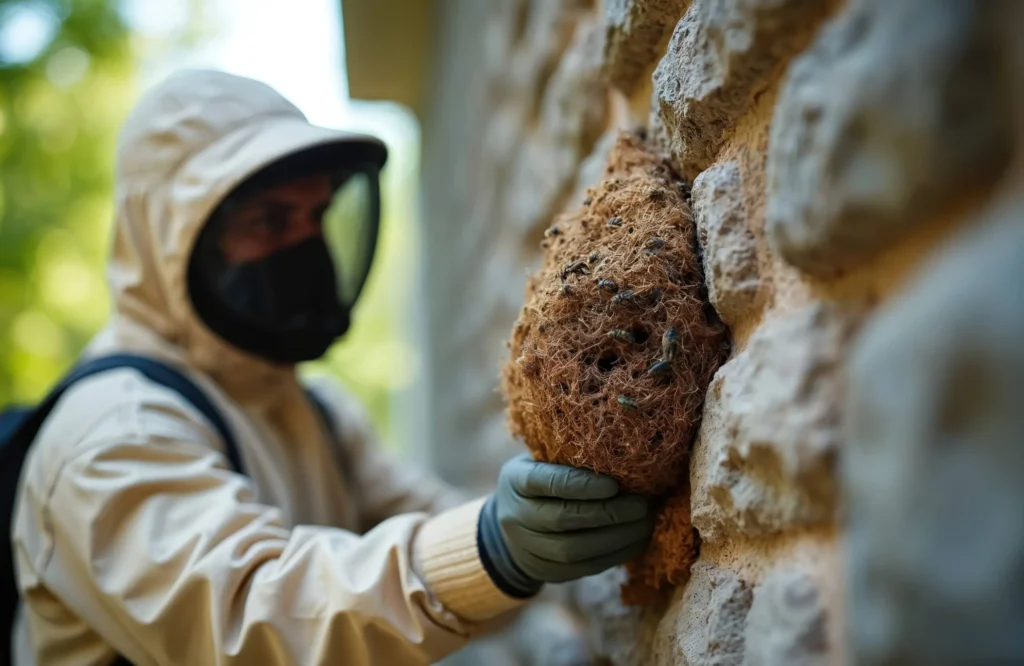
What our wasp treatment includes
- Quick survey — we locate the nest and confirm the species before treating.
- Safe, targeted treatment — professional-grade products applied by trained technicians with full protective equipment.
- Fast results — most nests are inactive within hours of treatment.
- Re-treatment guarantee — if wasps return within a set period, we come back free of charge.
Wasp prevention advice
After treatment we offer aftercare support and professional advice to help prevent future wasp problems, including tips on sealing entry points and reducing attractants around your property.
Frequently asked questions
How do I know if I have a wasp nest?
Look for large numbers of wasps flying in and out of a specific hole or gap in a wall, roofline, shed or tree. A sudden rise in wasp activity in one concentrated area usually means a nest is nearby. Some nests are visible; others hide inside wall cavities or loft spaces.
Will the wasps return after treatment?
No — once a nest has been properly treated it will not be reused. New nests can appear in future seasons, so we provide prevention advice and follow-up treatments where needed.
Can you remove the nest after it has been treated?
In many cases yes, although it is not always necessary. A treated nest is inactive and poses no further risk. If it is easily accessible we can remove it on request; in harder-to-reach spots leaving it in place is often the safest option.